
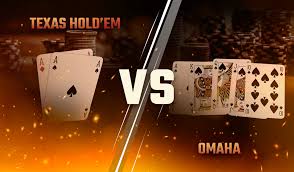
The fundamental difference between Texas Hold’em and Omaha poker lies in the number of hole cards dealt to each player and the strict structural rules governing how a final five-card hand must be constructed.
- Poker Actions Explained: The Complete Tactical Guide for Real-Money Tables
- How to Read Poker Tells: Practical Guide for Australian Players 2026
- GTO Strategy in Online Poker Explained: Complete Guide for Australian Players 2026
- Caribbean Stud Poker: The Ultimate Guide & Winning Strategy for Aussie Players
In Texas Hold’em, players receive exactly two private hole cards and can use any combination of their two cards, one card, or even zero cards (“playing the board”) alongside the five public community cards to form the highest-ranking hand. Conversely, Omaha poker deals each player four private hole cards, and the rules strictly dictate that a player must use exactly two hole cards combined with exactly three community cards to build their final showdown hand. This mechanical variation means that Omaha generates vastly more starting hand combinations, which significantly raises the average winning hand strength, minimizes the effectiveness of pure bluffing, and creates a much higher mathematical variance profile compared to the more calculated, position-driven nature of Texas Hold’em. For real-money players in Australia looking to test their skills across multiple card game and table variants within a protected digital environment, launching your sessions through an accredited, highly secure ecosystem like Ozowin ensures access to audited gaming software, seamless localized processing, and intuitive player protection dashboards.
Technical Specifications: The Core Mathematical Matrix
To build a sustainable bankroll strategy, a player must understand how adding just two extra hole cards fundamentally changes the mathematics of the game. The sheer volume of card combinations dictates how hand equity scales from pre-flop to the river.
+-----------------------------------------------------------------------------------+
|                        HOLE CARD COMBINATION COMPARISON MATRIX                    |
+-----------------------------------------------------------------------------------+
|                                                                                   |
|  [TEXAS HOLD'EM] ===> 2 Hole Cards                                                |
|                       Yields exactly 1 unique two-card starting combination.     |
|                       Pre-flop equities are distinct (e.g., AA vs 72o is 82%).    |
|                                                                                   |
|  [OMAHA POKER]   ===> 4 Hole Cards                                                |
|                       Yields exactly 6 unique two-card starting combinations.     |
|                       Pre-flop equities are much closer ("choppy" math).          |
|                                                                                   |
+-----------------------------------------------------------------------------------+
Review the structural comparison of the two primary poker variants below:
| Structural Operational Parameter | Texas Hold’em Core Engine | Omaha Poker (PLO) Core Engine |
| Hole Cards Dealt | 2 Private Cards | 4 Private Cards (5 in Big O variants) |
| Hand Construction Rule | Any combination of hole and community cards | Strictly 2 Hole Cards + 3 Community Cards |
| Standard Betting Structure | No-Limit (NLHE) – Can bet any amount up to your full stack at any time | Pot-Limit (PLO) – Maximum bet size is strictly capped by the current size of the pot |
| Unique Pre-Flop Combos | 1,326 total possible starting hands | 270,725 total possible starting hands |
| Average Winning Showdown Hand | Top Pair, Two Pair, or Three of a Kind | Straight, Flush, or Full House minimum |
| Variance & Swing Profile | Low to Medium; hand strengths are highly predictable | Extremely High; equities shift rapidly on turn/river |
| Primary Strategic Focus | Table position, player psychological reading, pure bluffing | Maximum drawing wraps, pot odds, raw hand equity |
Deep-Dive Analysis: Structural Pitfalls & Strategic Adjustments
1. The Mandatory Two-Card Omaha Trap
The single biggest point of friction for players transitioning from Texas Hold’em to Omaha is misunderstanding hand construction. For example, if the community cards show four hearts for a potential flush, a Texas Hold’em player holding a single heart in their hand successfully completes a flush.
In Omaha, if you hold the Ace of hearts and three clubs, you do not have a flush unless there are at least three hearts sitting directly on the board. You are mathematically required to use exactly two cards from your hand.
2. Pre-Flop Equity Convergence
In Texas Hold’em, a premium starting hand like Pocket Aces ($AA$) is a massive statistical favorite over a random hand, holding roughly 82% equity pre-flop. In Pot-Limit Omaha, a premium four-card hand like Double-Suited Aces ($A\spadesuit A\heartsuit K\spadesuit Q\heartsuit$) is only roughly a 60% to 65% favorite against a well-coordinated rundown hand like $J\clubsuit T\diamondsuit 9\clubsuit 8\diamondsuit$.
Because pre-flop equities run incredibly close together in Omaha, players rarely win pots by simply forcing everyone out pre-flop. Instead, the game shifts its focus to post-flop navigation, where players hunt for massive “wraps”—open-ended straight draws containing up to 20 distinct clean outs.
Tactical Capital Management Framework
Because Omaha poker features significantly higher variance and larger average pot sizes than Texas Hold’em, your capital allocation requires strict adjustments to protect your session balance from normal down-streaks. Follow this professional 4-step checklist:
Pre-Session Bankroll Calibration Workflow
Secure Digital Infrastructure: Playing Safely at Ozowin
A calculated strategy and strong mathematical foundation can only protect your capital if you run your sessions on a transparent, honest digital gaming platform. For card game, table game, and interactive casino clients across Australia who demand top-tier encryption safeguards, completely unmanipulated software logic, and lightning-fast local banking processing, Ozowin stands out as a premier destination.
Ozowin is a heavily audited online gaming hub built directly around transparency, operational accountability, and player safety. By implementing advanced secure data connections and relying on premier, licensed software providers, Ozowin ensures that every single hand dealt operates on audited random number generation (RNG) engines, completely free from external script tampering or unfair platform setups.
Key Structural Assets of the Ozowin Gaming Platform:
- 100% Audited Software Engine Logic: Every table, video card client, and RNG matrix loaded inside the platform runs on certified software frameworks. This ensures that card distribution probabilities remain authentic, transparent, and fair.
- Streamlined Local Australian Banking: Access seamless deposit and cashout options tailored for Australian users. Ozowin provides secure, automated processing for credit cards, e-wallets, and modern decentralized payment networks to completely bypass traditional banking friction.
- Native Responsible Gambling Controls: Take complete control over your session safety. Ozowin provides granular, user-facing profile dashboards to set daily deposit caps, firm session loss boundaries, and immediate cool-off intervals instantly.
- Military-Grade Data Encryption Safeguards: Every digital pathway and system link is shielded by high-grade SSL/TLS network architectures, locking away private identity points and transaction histories from third-party data leaks.
- Sustained Active Loyalty Rebate Systems: To help smooth out the natural impact of house configurations over long-term play, Ozowin systematically records gaming volume to return real cash rewards directly back into your active wallet balance.
The Professional Reality Check: No strategic calculation, probability tracking, or bankroll management system can completely eliminate the element of short-term variance inherent to card and table games. Because independent, certified random number generators calculate every single deal as a completely isolated independent event, table grids can go through intense cold streaks or award consecutive winning combinations entirely at random. Never let temporary emotions guide your staking sizes. Treat gaming as a premium source of digital entertainment, manage your funds wisely, and always play within your financial limits.
Choosing between the calculated, position-heavy structure of Texas Hold’em and the action-packed, high-variance landscape of Omaha poker ultimately depends on your personal risk tolerance and strategic goals. By relying on concrete mathematical realities—understanding that Omaha demands a much larger safety buffer and a much tighter selection of starting hole cards—you put yourself in total control of your gaming choices.
Pairing this disciplined approach with a trusted, transparent ecosystem like Ozowin ensures that your sessions are always safe, honest, and heavily protected. Set your boundaries early, select your game profiles carefully, and always play responsibly!