
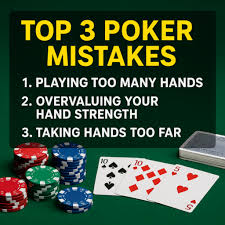
The fastest way to increase your poker win rate isn’t learning a complex, high-level bluffing theory—it is simply plugging the massive operational leaks that are bleeding your chips away session after session. In poker, a dollar saved by making a disciplined fold carries the exact same weight on your bottom line as a dollar won from a massive river value bet. If you find yourself consistently grinding for hours only to watch your stack evaporate, you are likely falling into a few classic behavioral and technical traps that separate long-term losing players from the sharks.
- Texas Hold’em vs Omaha Poker: Structural Rules, Mathematical Variance, and Strategy Guide
- Poker Actions Explained: The Complete Tactical Guide for Real-Money Tables
- How to Read Poker Tells: Practical Guide for Australian Players 2026
- GTO Strategy in Online Poker Explained: Complete Guide for Australian Players 2026
Below is the definitive breakdown of the most common poker mistakes that cost you money at the tables, along with the concrete, mathematical adjustments you need to execute right now to protect your bankroll.
1. Exercising Poor Bankroll Management (BRM)
This is the ultimate bankroll killer. You could be the second-best Texas Hold’em player in the world, but if you sit down at a high-stakes table with your entire net worth, natural statistical variance will eventually bankrupt you.
Many players in the Philippines jump into cash games or local tournaments simply because they feel lucky or want to chase a big score, completely ignoring the volatile nature of the game.
- The Cost: When you play under-capitalized, you inherently suffer from “scared money” syndrome. You will fold winning hands due to fear of elimination or hesitate to make profitable, high-variance bluffs.
- The Fix: Treat your poker money completely separate from your living expenses. As a strict rule of thumb:
- Cash Games: Maintain at least 20 to 30 buy-ins for the stake level you are playing.
- Tournaments (MTTs): Keep at least 100 buy-ins behind to withstand the brutal downswings of multi-way fields.
2. Playing Too Many Hands Preflop (Playing Too Loose)
The most common mistake among amateur players is the refusal to fold preflop. It is easy to get bored waiting for premium cards, leading players to open-raise or call with marginal hands like $K \spades 9 \clubsuit$ or $J \heartsuit 7 \heartsuit$ from early positions.
[ Your Preflop Range ] ---> Should only be the top 15% - 20% of hands
[ Realist Flat Range ] ---> Playing 35%+ hands is mathematically unprofitable
- The Cost: Playing weak starting cards puts you in incredibly difficult post-flop situations. You will routinely find yourself dominated by tighter opponents, hitting second-best pairs that force you to pay off large river bets.
- The Fix: Tighten your preflop requirements. In a standard 6-max online cash game, aim to play roughly the top 20% of hands dealt to you. In a full-ring 9-handed live game, restrict that further to the top 15% of your range.
3. Completely Ignoring Table Position
In poker, information is the primary currency. Table position determines who acts last on every post-flop betting round. Playing hands out of position (OOP)—such as from the Small Blind or Under the Gun (UTG)—means you are forced to make decisions completely blind to your opponents’ intentions.
- The Cost: Winning hands played in position win significantly larger pots than the exact same hands played out of position. Conversely, losing hands lose far less when you have the benefit of acting last.
- The Fix: Adopt a dynamic positional strategy. You must play incredibly tight from early positions and systematically widen your opening ranges as you move closer to the Button (BTN).
Position Rule: If a marginal hand like $Q \diamondsuit 9 \diamondsuit$ is a profitable open-raise on the Button, it is an absolute money-losing trap to play it from UTG.
4. Chasing Drawing Hands Without Proper Pot Odds
We have all been there: you hold a beautiful four-card flush draw on the flop, and your opponent fires a massive, pot-sized bet. Your instincts tell you to call because “hitting the flush will win a huge pot.”
- The Cost: Chasing draws blindly without calculating the mathematical risk is a direct leak. If the math does not support the call, you are literally giving away equity to your opponents.
- The Fix: You must calculate your pot odds against your card odds (outs).
- If you have a standard flush draw on the flop, you have 9 outs to hit your hand by the turn, which translates to roughly an 18% chance (about 4.5-to-1 odds against hitting).
- If an opponent bets an amount that requires you to risk 35% of the total pot to call, the math dictates an immediate, disciplined fold. Only call if the potential payout (including implied odds) completely justifies the price of admission.
5. Playing Passively and Limping Preflop
Limping—simply calling the amount of the big blind instead of raising—is the hallmark of a weak, recreational player.
- The Cost: When you limp, you surrender the opportunity to win the pot right then and there preflop. Furthermore, you invite multiple late-position players to see a cheap flop with speculative hands, destroying your equity and making the pot impossible to control post-flop.
- The Fix: Eliminate open-limping from your strategy entirely. If a hand is worth playing, it is worth raising. Raising allows you to take control of the betting lead, isolate weaker opponents, and give yourself two distinct ways to win the hand: either by making the best hand or by forcing everyone else to fold.
6. Going on “Tilt” and Emotional Betting
Poker is a game of cold, calculated logic, yet it is played by emotional human beings. Experiencing a brutal bad beat—such as your pocket Aces losing to a runner-runner straight—can trigger “tilt,” a state of mental frustration where strategic thinking completely goes out the window.
- The Cost: Tilted players abandon their ranges, execute desperate, illogical bluffs, and make massive hero calls out of pure spite. A single hour of uncontrolled tilt can instantly wipe out months of disciplined, hard-earned winnings.
- The Fix: Recognize your personal emotional triggers. If you feel your heart rate rising or find yourself playing hands out of anger, implement a strict stop-loss rule. If you lose three buy-ins in a single session, close the client or walk away from the casino immediately. The games will always be there tomorrow; your bankroll might not be.
Summary: Strategic Checklist for Profitable Poker
| Poker Mistake | Immediate Strategic Correction |
| Under-capitalized Play | Maintain 20-30 buy-ins for cash games; 100+ for MTTs. |
| Too Loose Preflop | Limit preflop play to the top 15% – 20% of premium hands. |
| Ignoring Position | Play tight in early positions; attack heavily from the Button. |
| Over-Calling Draws | Fold draws instantly if the pot odds do not match your equity. |
| Open-Limping | If the hand is worth entering the pot, always enter with a raise. |
| Emotional Tilting | Walk away from the table after losing a set stop-loss limit. |
By systematically isolating these six common poker mistakes, you will naturally stop bleeding chips in marginal scenarios. Shift your focus away from short-term results and lock into making mathematically sound, disciplined decisions. Your bottom line will thank you